
How do I invite my team to Ternary?
Learn how to invite users to Ternary using manual invites, email domains, or SSO, and manage access for team collaboration.
Ternary supports multiple methods for adding users and managing access across teams. Users can be invited manually, onboarded through approved email domains, or provisioned automatically using SSO or SAML-based authentication.
Access can be configured based on roles to ensure appropriate permissions for collaboration on reports, recommendations, and cost analysis workflows.
Invite via Admin page
Users can be invited manually through the Ternary Admin page. Navigate to Admin → Users to manage user access.

- Select “Add New User.”
- Enter a single email address or paste a comma-separated list of email addresses.
- Assign a role for each user:
- Regular User: Default role with view-level access, similar to a Viewer role in Google Cloud
- Owner: Full access to manage and modify the tenant
- Select Submit to add the user(s).
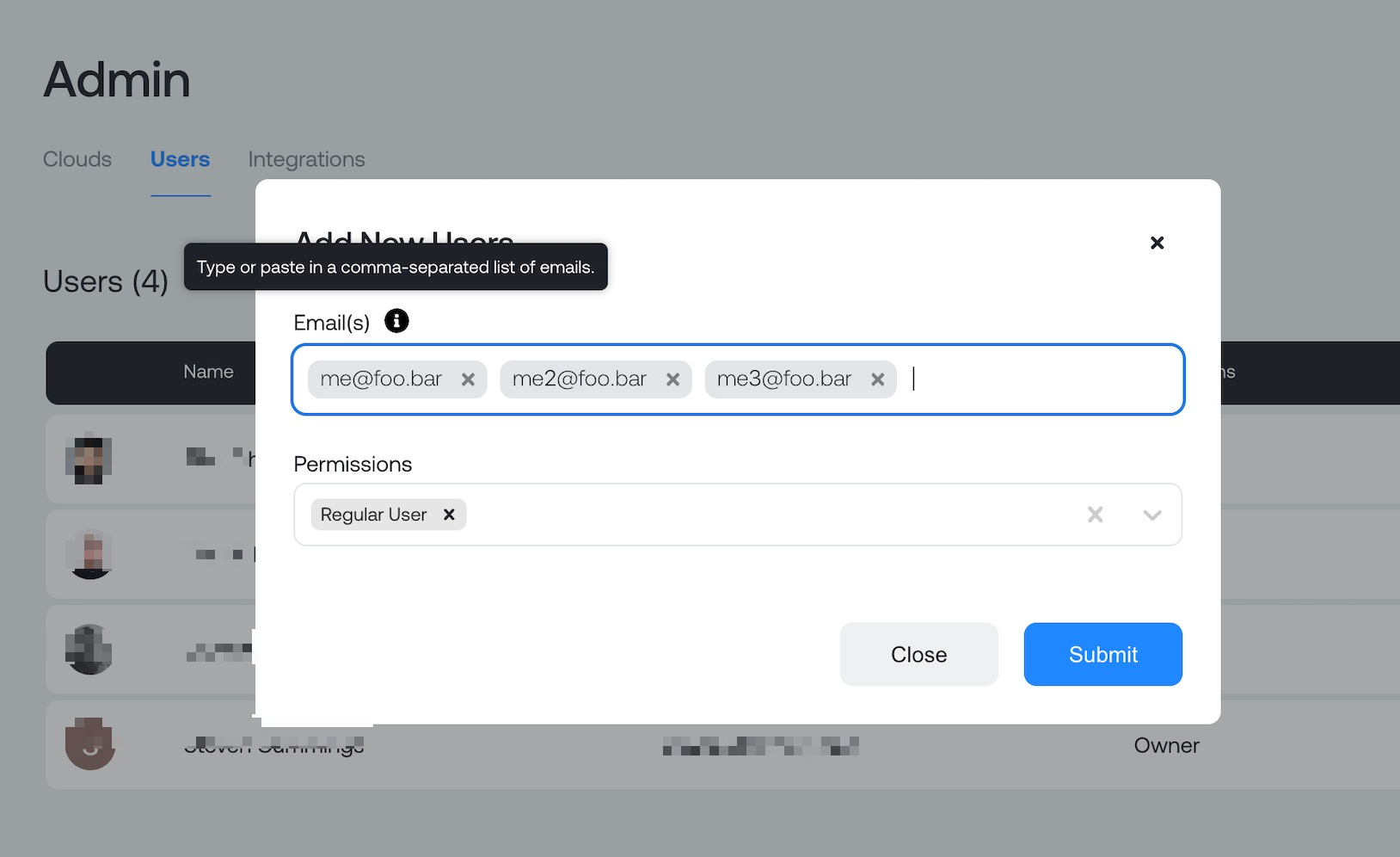
Invited users receive an email invitation to join Ternary. Access is associated with the email address used during signup. During initial login, users are prompted to authenticate using “Continue with Google.”
Invite via Email domain
Ternary supports automatic user access based on approved email domains. When configured, users signing up with an approved domain are assigned default permissions within the tenant.
To enable this feature, submit a request to [email protected] with the domain to be configured.
Invite via SSO/SAML
Ternary integrates with Auth0 to support SSO and SAML-based authentication. The following identity providers are supported:
- Okta / OneLogin
- Google Workspace
- Microsoft Azure Active Directory
- Microsoft ADFS
- Active Directory / LDAP
- Ping Federate
- Generic SAML
- Generic OpenID Connect
When configured, user accounts can be created automatically for users who authenticate through the configured identity provider.
To enable SSO/SAML, submit a request to [email protected] with the selected identity provider.
For more information on SSO, refer to this documentation.
Updated 6 months ago