
Case Management
Ternary Case Management enables engineering to investigate anomalies and take action on optimization opportunities.
Overview
Have you ever come across an interesting data point in your cloud bill and wished there was an easier way to collaborate with your team on it? Look no further than Ternary Case Management.
Case Management extends Ternary's industry leading collaboration functionality beyond discrete events like recommendations and alerts to other areas of the platform, allowing you to quickly create a case and collaborate with others to track and analyze any data points you find in your cloud bill. In this article, we'll take a closer look at Case Management's capabilities and show you how to create your first case, helping you coordinate your cloud cost analysis efforts.
Accessing Ternary Case Management
Throughout the application you can initiate a case wherever you see a paper & pencil icon with "Case Mgmt" in the top toolbar.
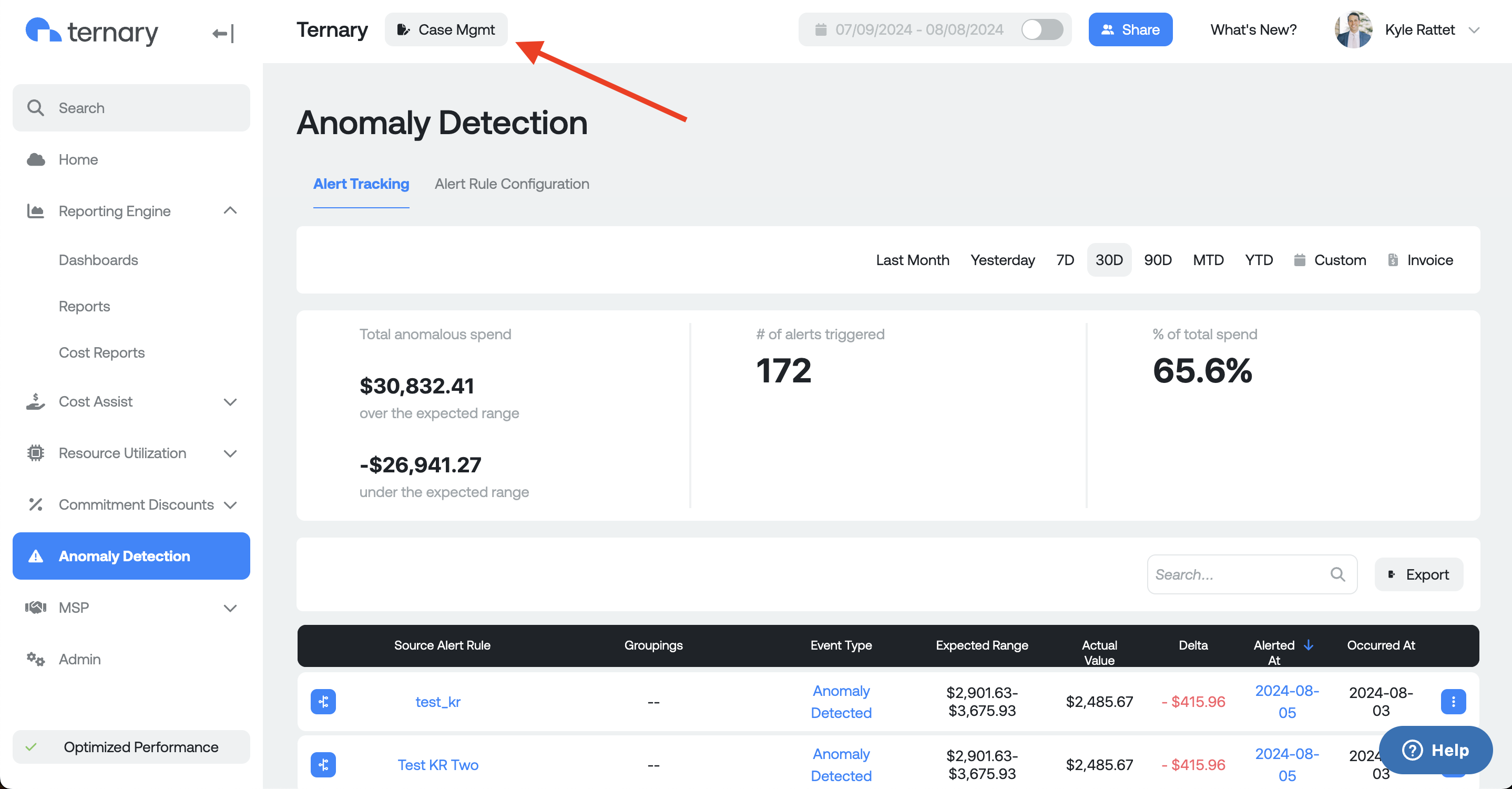
Click the button to open a side drawer and configure a new case.
Create a Case
In the creation drawer, fill out the name and description fields with details of the case you wish to create. Once you have entered your details, click the “+select resource” box. This will hide the customization drawer and allow you to select one of your dashboard widgets. Select one resource when creating the case.
A case can link to a budget, cost alert, ramp plan, recommendation or report. Check the selected resource name/type and review any automatically populated description. If the loaded case list contains an open case for that resource, Existing Case warns before creating a separate case; it does not prevent duplicates.
Next choose who you want to be assigned to the case, one or more users can be designated from the drop down list. Assignees are included in case-update notifications, subject to the event and recipient conditions below.
Creators follow their cases by default. Notifications cover comments and assignee or status changes; edits to the name, description, followers or mute settings alone do not notify. The actor, muted recipients and users whose case-update notifications are disabled for the tenant are excluded. Clear Follow Case if you do not want to follow the new case.
The last step is to label this case as either an Investigation, Optimization, or Task. Once you are finished, click “Submit” to create the case. You will receive a green confirmation bar on the top of your screen upon successful creation.
Add to Case
The creation drawer has no Add to Case action. To add discussion to an existing case, open it and use its comment composer. The composer does not include a report or widget picker.
Ternary Case Management Page
The Case Management page lists cases available to you. If your sidebar includes Govern, look for Govern → Cases. Some navigation layouts hide the Cases sidebar link; its absence does not by itself mean that the destination or capability has been removed.
Current access limitation: With case-read permission, the list includes tenant cases. Otherwise it includes only cases you created or are assigned to; following alone does not qualify. Opening an individual case still requires case-read permission.
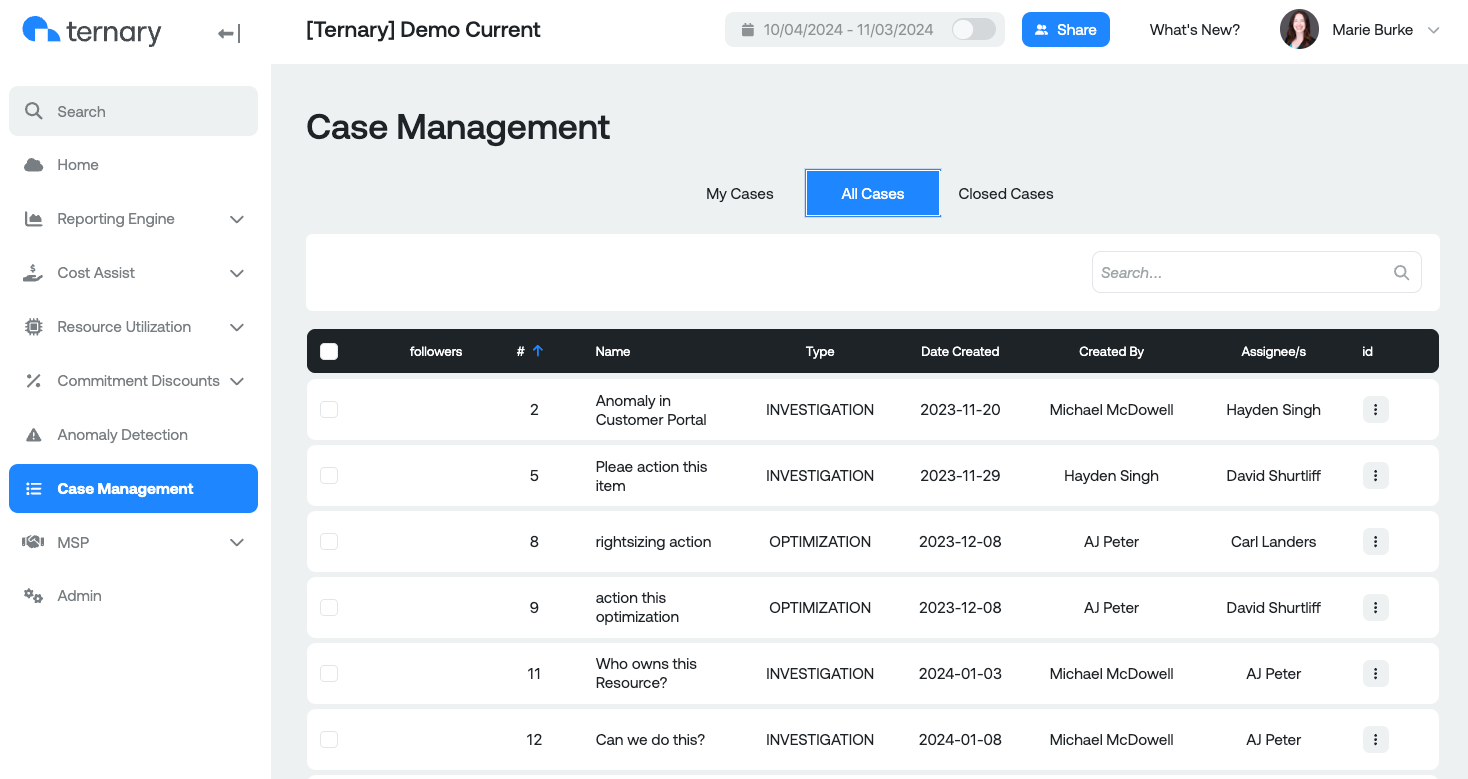
On the Case Management page you have three view options:
- My Cases
- All Cases
- Closed Cases
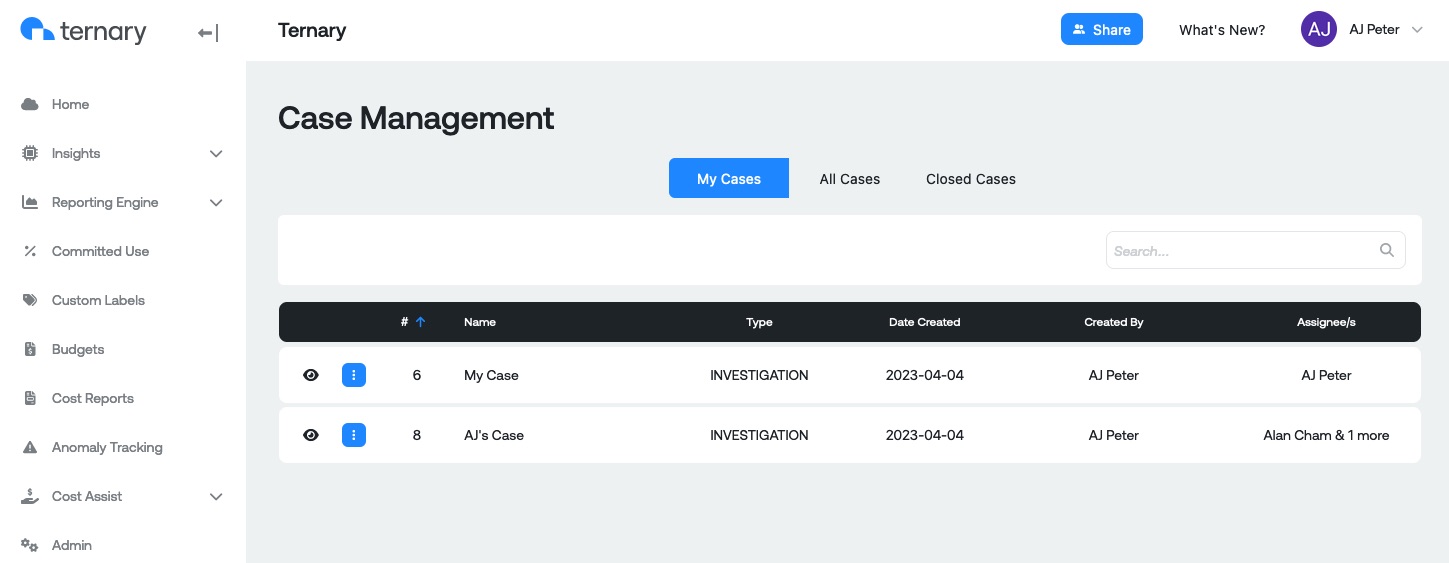
For each of the choices you will see a table below which shows you if you are following the case, the case number, name, type, date created, creator and the assignee's. You can quickly change the sort order of any column by clicking the column name.
To open a case, select its row in the Case Management table.
Case View
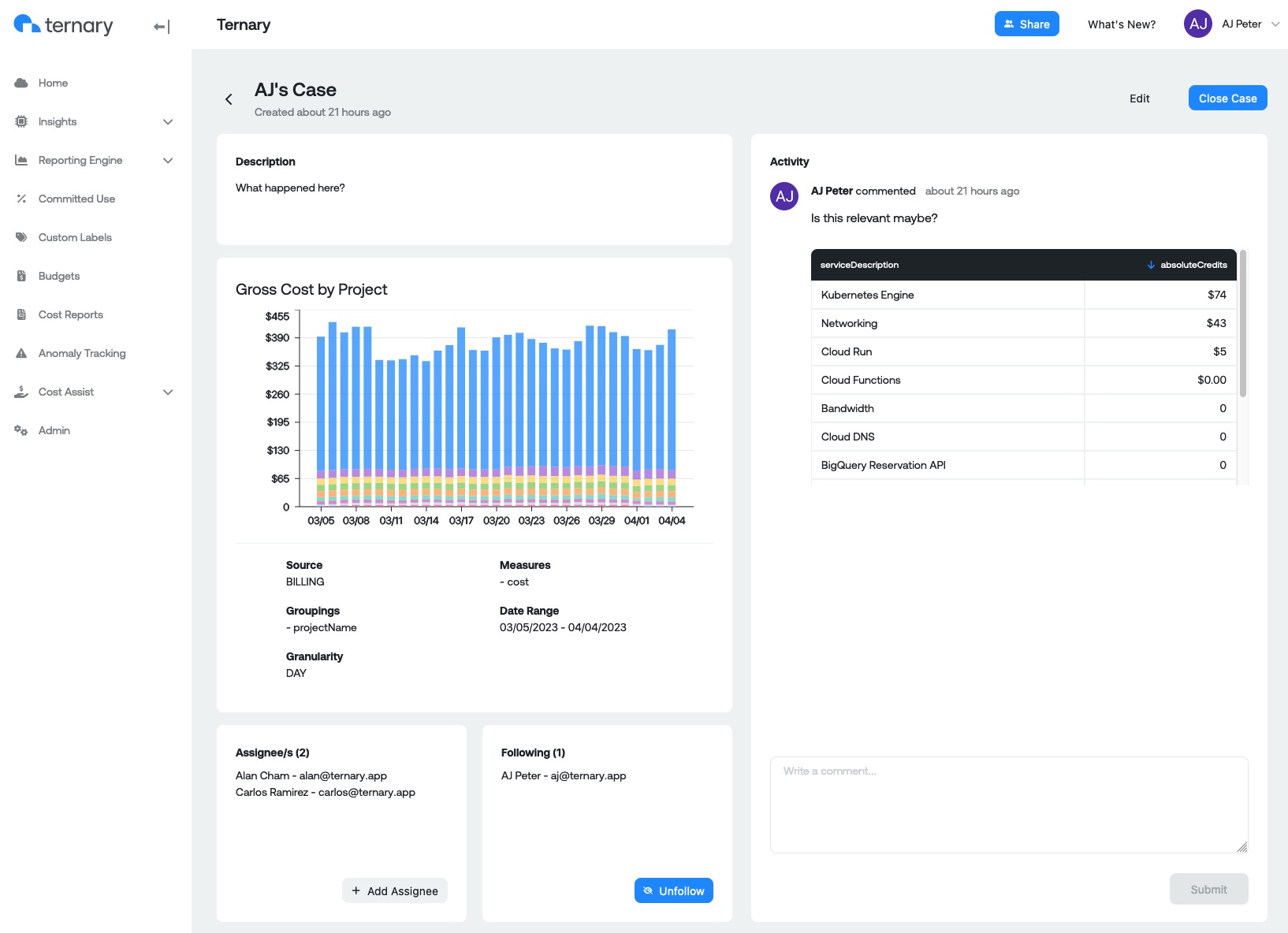
When viewing a case, you will see the description, initial widget, assignee's, followers and the activity.
Linked evidence is loaded again from its underlying resource and analytics when you view a case. It is not an immutable copy of what the creator originally saw.
For a primary linked report, supported rolling and to-date ranges are anchored to the case’s creation date; an explicit custom range stays unchanged. This fixes the applicable dates, but the report definition and data can still change. Report charts referenced in activity comments use their loaded report definition directly and do not receive that primary-report date anchoring. When comparing a later result with an earlier investigation, account for both the date range and changes to the report or underlying data.
Depending on your permissions, this view provides assignee and follower controls, case editing, comments and closing actions.
UI editing and bulk close require case-update permission. The single-case API also allows the creator to update their case; that exception does not enable UI edit controls or bulk close.
Follow/Unfollow changes your own follower membership; Mute/Unmute changes your own mute setting. These changes require case-update permission or case-creator ownership. Following does not grant read access or guarantee notifications. If you cannot mute a case, ask an administrator for help reviewing your case notification settings.
Updated 6 days ago